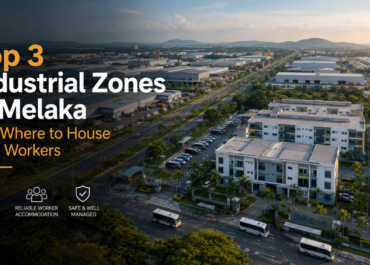



If your company still provides accommodation for workers using rented houses or shop lots, you are encouraged to review those arrangements at this time. The Melaka TLQ phase out is moving faster as local authorities are also trying to get employers to move workers into approved accommodations. By the time the 2026 worker housing deadline arrives, businesses that still depend on temporary housing may struggle with inspections, relocation costs, and housing shortages.
Organizations continued to use TLQs as their accommodations as they were easier to rent near factories and work sites, and over time, this has led to challenges in various neighbourhoods, due to more complaints about overcrowding, unsanitary conditions, excessive noise, and not enough parking. CLQ Melaka is being developed to minimize these concerns and locate workers in purpose-built, large group housing.
What Is the Melaka TLQ Phase Out?
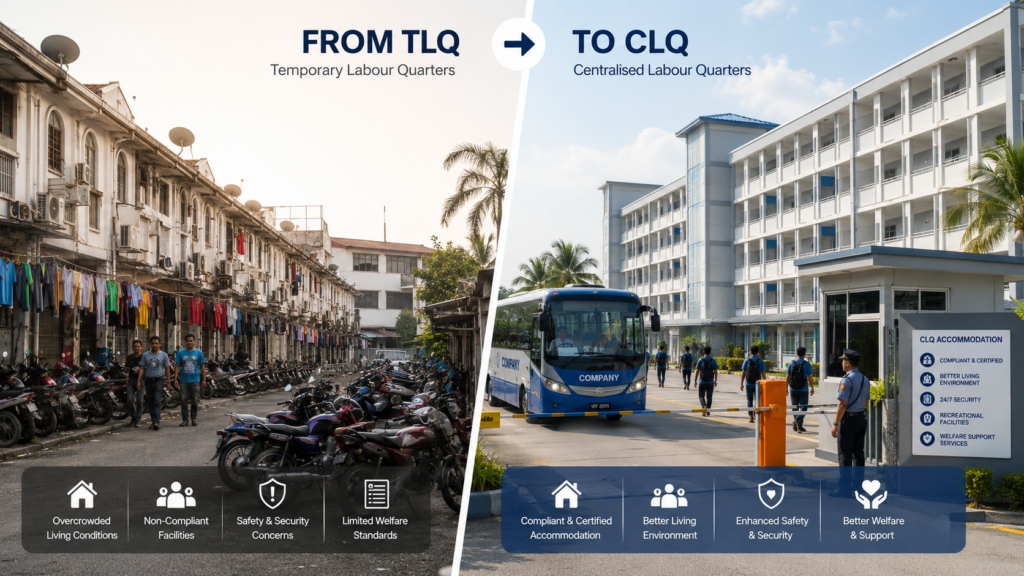
The Melaka TLQ phase out means temporary worker housing is no longer seen as a suitable long-term solution. In the past, companies often rented terrace houses, apartments, and commercial units to place foreign workers close to work areas. Some properties ended up housing too many people in spaces never designed for that purpose.
Authorities now want workers moved into approved CLQ Melaka facilities instead. These accommodation centres follow housing standards under Act 446 and are easier for labour officers to inspect. Companies also get a more organised system for worker records, room capacity, transport planning, and daily management.
TLQ vs CLQ Melaka
| Item | TLQ | CLQ |
| Purpose | Temporary worker housing | Approved worker accommodation |
| Common location | Houses, apartments, and shoplots | Centralised worker housing |
| Compliance risk | Higher risk after the Melaka TLQ phase out | Better fit for Act 446 rules |
| Daily management | Harder to monitor across different places | Easier to handle records and inspections |
| Employer impact | Higher chance of relocation problems | Better preparation before the 2026 worker housing deadline |
Why More Companies Are Moving to CLQ Melaka
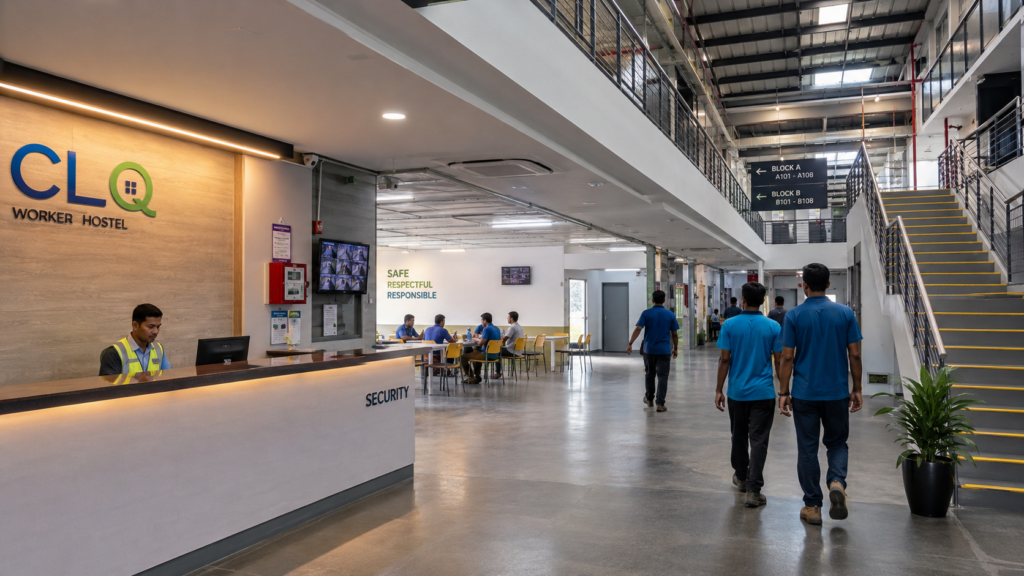
Some employers have already started moving workers into CLQ Melaka because they want fewer housing problems later. Managing workers across several rented houses takes more time than many companies expect. HR teams often deal with landlord issues, repairs, transport complaints, and inspection requests at the same time. A centralised setup makes daily management easier.
CLQ Melaka facilities also give companies a better structure before the 2026 worker housing deadline gets closer. Many centres already include security, shared facilities, laundry areas, minimarts, and transport access near industrial zones. Workers stay in one organised location instead of being spread across multiple neighbourhoods. That makes inspections and record checks more manageable.
What the 2026 Worker Housing Deadline Means
The 2026 worker housing deadline is not only about accommodation. It affects hiring plans, transport costs, workforce movement, and operational planning. Companies that plan to hire more foreign workers should check accommodation availability first. Waiting too long may create problems later when more employers compete for the same CLQ Melaka spaces.
This is already happening in some industrial areas where approved accommodation fills up quickly. Companies that move earlier usually have more choices for location and transport arrangements. Businesses that wait until the last stage may end up paying more or relocating workers further away from their workplaces.
How This Affects HR and Operations

The Melaka TLQ phase out affects more than worker housing. HR and operations teams now need to plan worker movement, transport schedules, room assignments, and housing records together. If your workers stay in several rented houses, your team may spend too much time handling repairs, landlord issues, complaints, and inspection requests.
Moving workers into CLQ Melaka gives the company one clearer system to manage. Your team can track occupancy, worker details, transport timing, and accommodation records in one place. This becomes more useful as the 2026 worker housing deadline gets closer.
Transport planning also matters. Some workers now stay near factories because employers rent nearby homes or shop lots. Once they move into CLQ Melaka, the company may need to arrange buses, adjust shift timing, and plan pick-up points properly. Early planning helps reduce delays and daily worker movement issues.
How to Choose the Right CLQ Melaka Facility
Not every CLQ Melaka facility will fit your company’s daily operations. Before you sign any agreement, look at the location, room capacity, transport access, security, rental cost, and distance from the workplace. A cheaper facility may cost more later if workers spend too much time travelling or if the support is poor.
- Check the location and transport
Start with travel time. If your workers need one hour to reach the factory, shift changes may become harder to manage. Check whether the facility has proper pick-up points, bus access, and entry control for early morning or night shifts.
- Ask about daily management
Ask who handles repairs, visitor control, emergencies, complaints, and inspections. These details matter during the Melaka TLQ phase out because housing compliance will receive more attention. A good operator should help your company keep records properly and respond faster when labour officers request information.
- Plan for future worker numbers
Choose CLQ Melaka based on current and future needs. If your company plans to hire more workers, ask whether the facility has enough space before the 2026 worker housing deadline. This helps avoid another relocation problem later.
What Companies Should Do Now

Review current housing: Check where your workers are staying now. Some may still be in rented homes, shoplots, or uncertified hostels. If the housing does not meet the rules, start planning around the Melaka TLQ phase out early.
Compare CLQ Melaka options: Speak to a few CLQ Melaka operators and compare the basics. Look at room capacity, transport access, security, rental cost, and distance from the workplace. Choose a place that fits your daily operations.
Keep records ready: Keep worker lists, accommodation approvals, and occupancy details in one place. Labour officers may ask for these during inspections. Good records help reduce delays before the 2026 worker housing deadline.
What Happens If Employers Delay?
Delays often create higher costs later. Companies may suddenly need to move large groups of workers within a short period if enforcement becomes stricter. That affects transport planning, production schedules, and HR operations at the same time.
The Melaka TLQ phase out also increases pressure on companies that still depend on scattered housing arrangements. Finding available CLQ Melaka rooms during the final stage may become
harder as demand increases. Employers who plan earlier usually avoid rushed decisions and unnecessary operational stress.
FAQ About Melaka TLQ Phase Out and CLQ Melaka
Q: Is RTK 2.0 still available?
A: No. RTK 2.0 is no longer open for new registration. Employers should follow current hiring procedures and prepare proper worker accommodation before bringing in new workers
Q: Is RTK 3 open in Malaysia?
A: No official RTK 3 programme is active right now. Employers should rely on official government announcements instead of social media claims or unofficial sources.
Q: How to apply as a foreign worker in Malaysia?
A: Employers must follow official recruitment steps, including quota approval, immigration checks, medical screening, and valid work permits. Companies should also prepare approved accommodation because housing compliance now receives closer attention under the Melaka TLQ phase out and the 2026 worker housing deadline.
What To Do Next
The Melaka TLQ phase out is already changing how companies manage worker housing in the state. Businesses that still rely on temporary housing should start planning now instead of waiting for the final enforcement stage. Moving workers into CLQ Melaka earlier gives companies more time to manage cost, transport, and compliance properly before the 2026 worker housing deadline arrives.